
Johann
Heinrich (John Henry) Wiemers
Johann
& Aalke Wiemers Heritage Site
|
Johann
Heinrich (John Henry) Wiemers |
Johann
& Aalke Wiemers Heritage Site |
|
Wiemers
Family Branch: |
Patriarch
of our Wiemers Family in America |
|
BIOGRAPHY
STATISTICS: |
| Name | Born | Died | Ref# | |
Johann
Heinrich (John Henry) Wiemers |
1825 Mar 22 | 1906 Jun 18 | 0001 | |
Birth
Place: |
Aurich, Ost-Friesland, Germany | |||
| Father: |
Christoph Tepken Wiemers | |||
Mother: |
Anna Margaretha (Meta) Lahmann Wiemers | |||
Siblings: |
(sister) Christina Margaretha Wiemers | 1804 Oct 24 | ||
| (brother) Tepke Hemmen Wiemers | 1806 Jan 19 | 1882 Jan 3 | ||
| (brother) Johann Bernhard Wiemers | 1807 Dec 13 | died as a child | ||
| (sister) Taalke Margarethe Wilhelmine Wandrina Wiemers | 1809 Sep 23 | died as a child | ||
| (brother) Johann Hinrich Wiemers | 1810 Nov 13 | |||
| (sister) Talke Margaretha Wiemers | 1812 Apr 15 | |||
| (brother) Christian Bernhard Wiemers | 1814 Jan 12 | |||
| (sister) Trientje Gersina Wiemers | 1816 Mar 19 | |||
| (brother) Hinrich Wilhelm Wiemers | 1819 Feb 9 | |||
| (sister) Anna Rebecca Wiemers | 1821 Mar 7 | |||
| (brother) Christoph Anton Tepken Wiemers | 1822 Dec 16 | 1882 Jan 3 | ||
Spouse: |
Aalke Jansen Gerdes | 1839 | 1923 | 0002 |
Marriage
Date: |
1865 Jun 15 | |||
| Children: |
(boy)
Christoph John Wiemers |
1857 Jul 15 | 1878 Sep 18 | 1000 |
| (boy) John Christopher Wiemers | 1859 Feb 24 | 1895 Jul 29 | 2000 | |
| (boy) Bernhardt Christian Wiemers | 1861 Feb 18 | 1932 Oct 14 | 3000 | |
| (girl) Fannie Christina Wiemers | 1863 Feb 8 | 1913 Oct 6 | 4000 | |
| (boy) William Dietrich Wiemers | 1865 Sep 20 | 1951 Apr 20 | 5000 | |
| (boy) Dietrich William Wiemers | 1867 Oct 24 | 1953 Apr 13 | 6000 | |
| (girl) Anna Meta Wiemers | 1870 Jun 27 | 1960 Apr 23 | 7000 | |
| (boy) George Henry Wiemers | 1873 Mar 29 | 1960 Jan 27 | 8000 | |
| (boy) Theodore John Wiemers | 1875 Aug 4 | 1963 Jan 3 | 9000 | |
| (girl) Alina Johanna Wiemers | 1877 Dec 19 | 1907 Feb 17 | 10000 | |
|
PICTURES: |
(click on picture to enlarge) |
 |
 |
 |
 |
|
|---|---|---|---|---|
 |
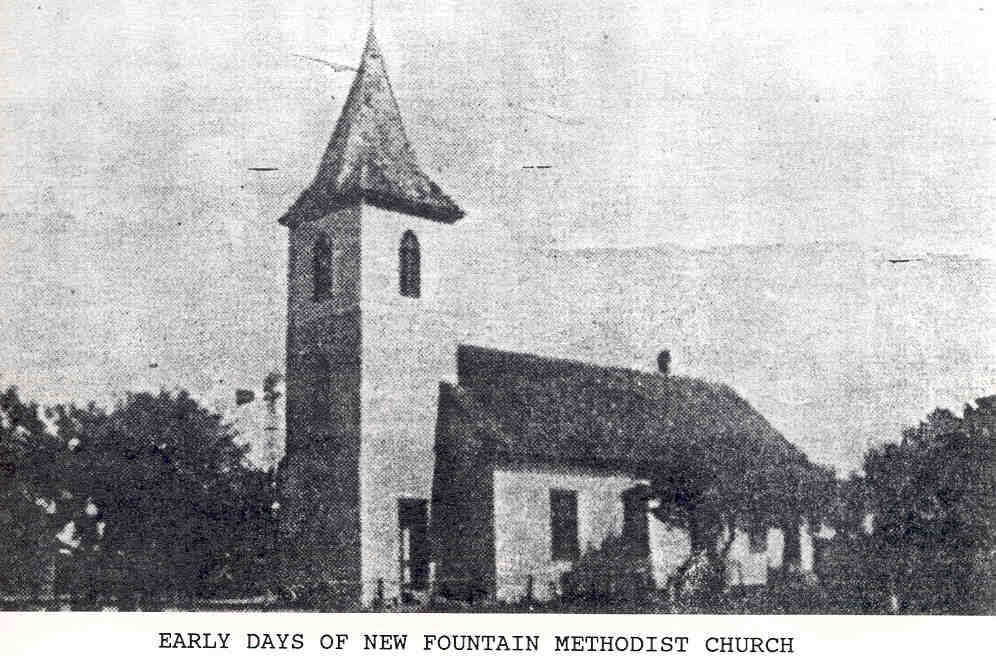 |
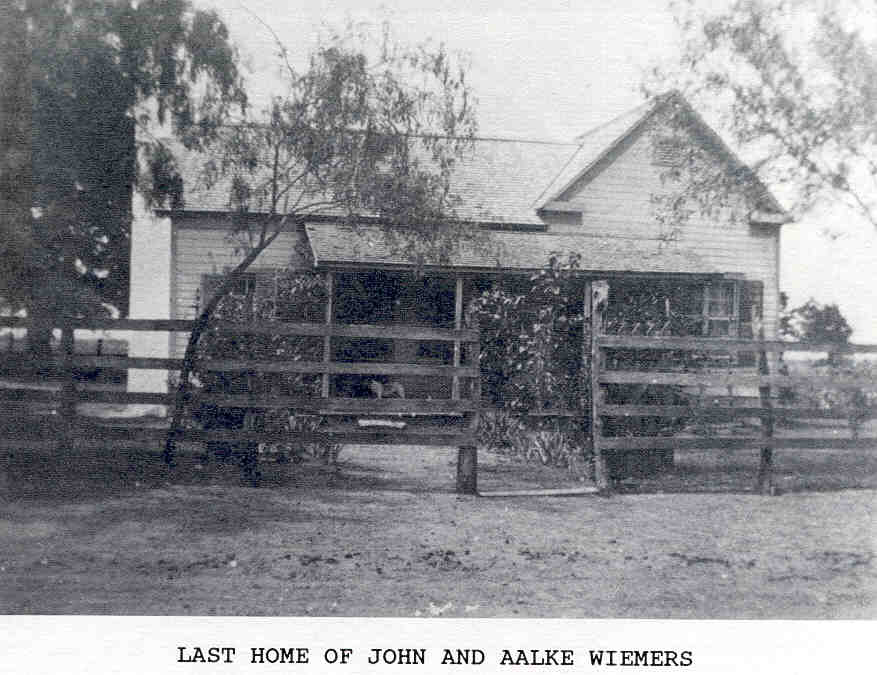 |
Children
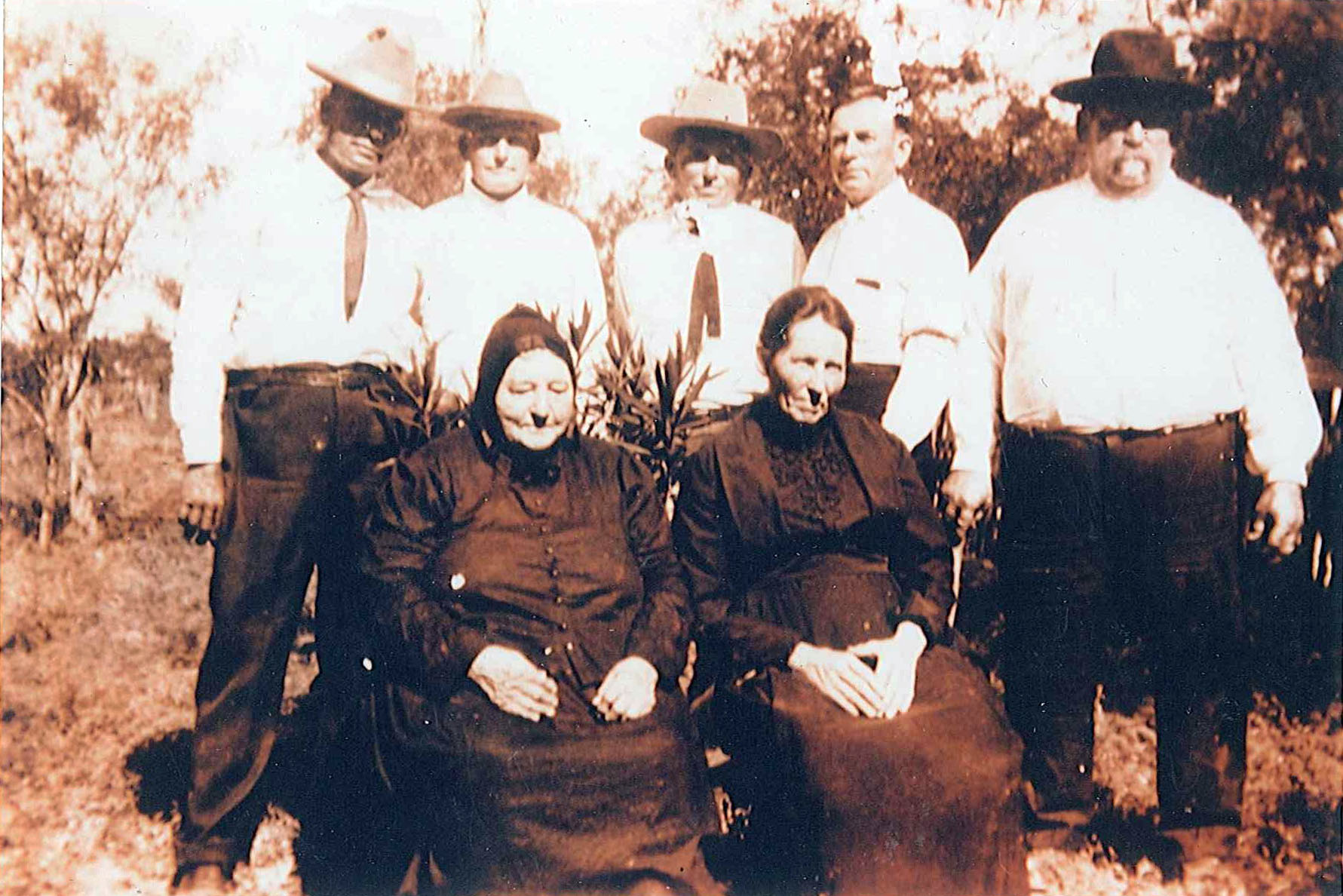
of Johann & Aalke (top left to right) - Theodore John Wiemers - George Henry Wiemers - Dietrick William Wiemers - William Dietrich Wiemers - Bernhardt Christian Wiemers (bottom left to right) - Aalke Gerdes Wiemers - Anna Meta Wiemers |
| Johann
Heinrich (John Henry) Wiemers |
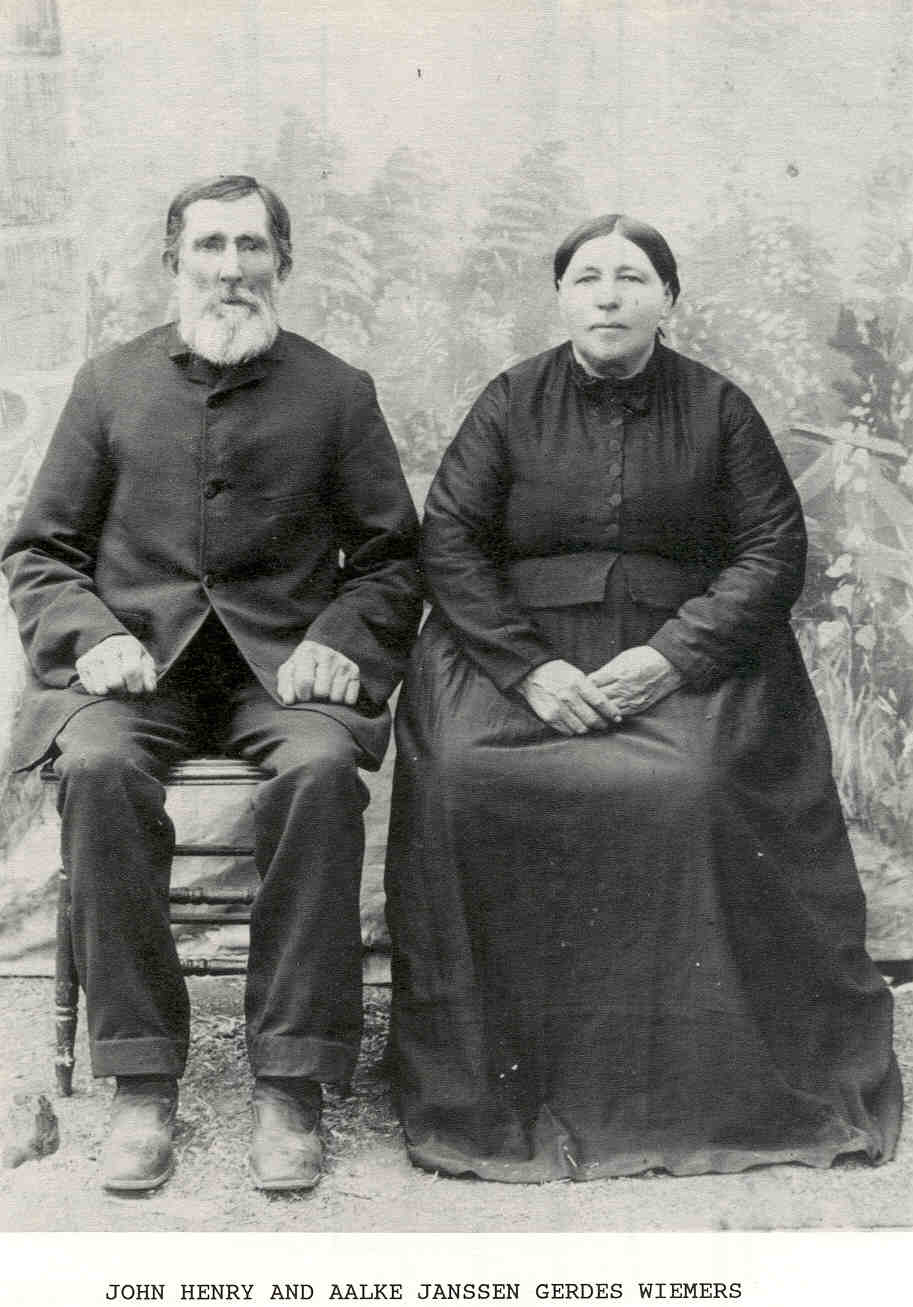
Johann Heinrich (John Henry) Wiemers is the patriarch of our Wiemers family in America.
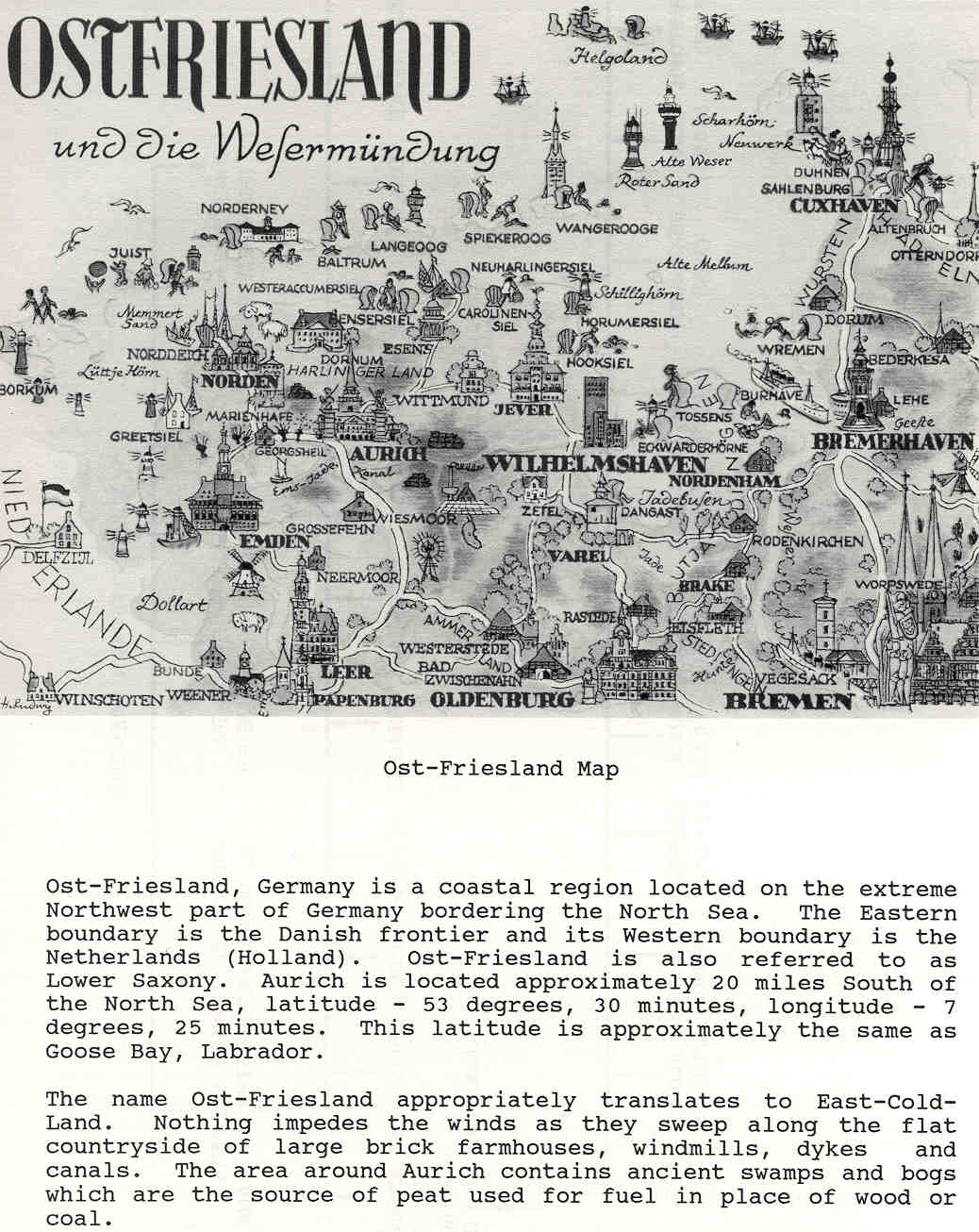
Johann was born as a poor child in Germany, the youngest of 12 children (all children were born in Aurich, Ost-Friesland, Germany). Johann's father, Christoph Tepken Wiemers, worked as a master baker in Aurich. At one time, Christoph was a wealthy contractor, however he ost all f his property by misplacing some of his valuable papers. Johann was born when Christoph was a poor man. Grieved because of his adversity, Christoph died soon after Johann's birth. Johann's mother, Anna Margaretha (Meta) Lahmann Wiemers, was taken to the poor-house, and Johan was placed with strangers who were unkind to him. Often Johann dreamed at night that he had a piece of bread to eat, only to awake ot the reality of hunger. He greatly relished the crumbs the other school children threw away. When he was a little older, he hired himself out to a blacksmith as an apprentice for three years.
Little detailed information is know about the voyage of brothers Johann and Christoph to America. Families were assigned a small narrow space to occupy on the ship. Many times there were rough seas and the passengers had to stay off the top deck. Weeks of sea sickness was common. Most voyages from Bremen to Galveston took approx. 55 to 65 days, through some ill-fated voyages lasted up to 90 days.
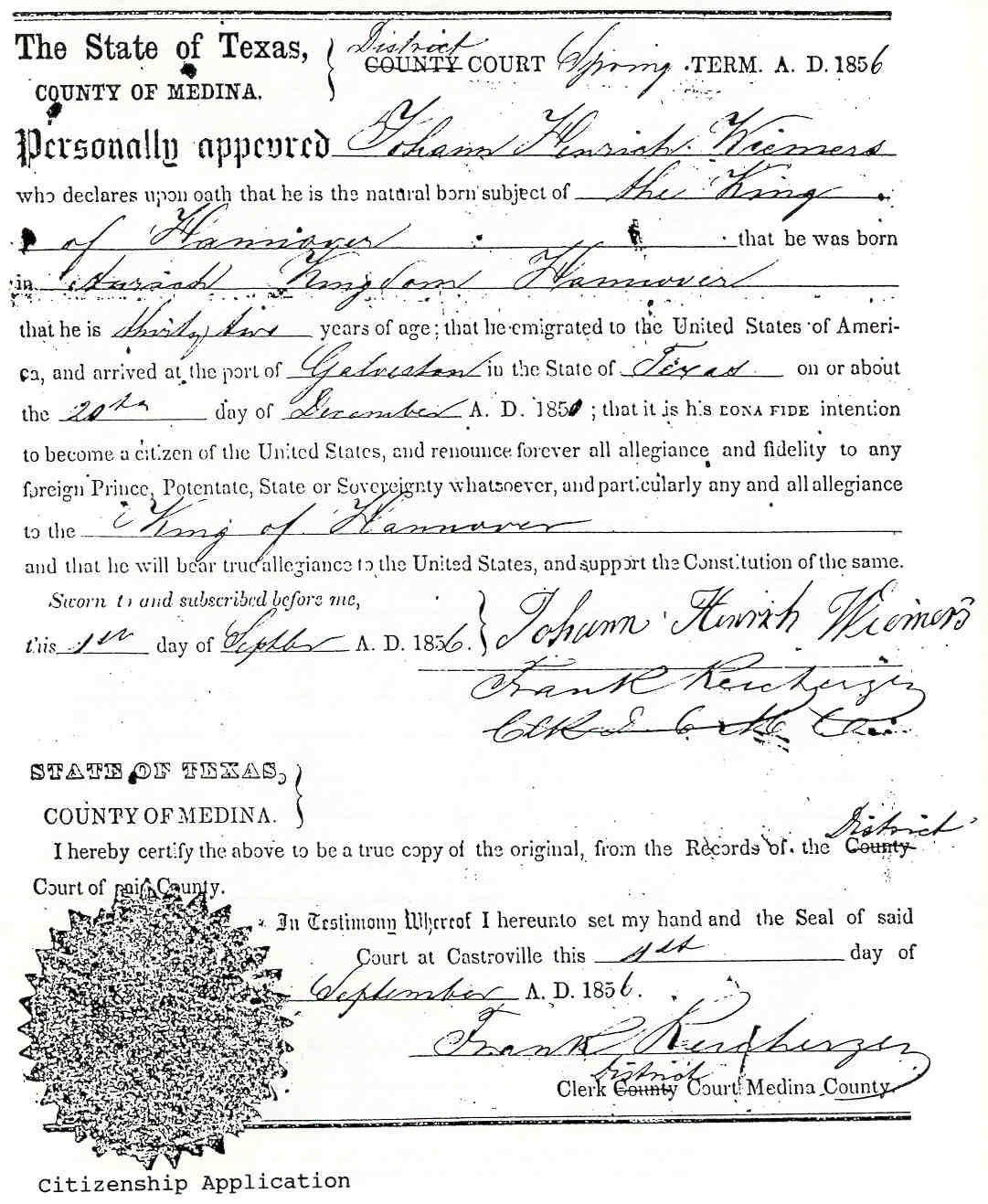
The exact day Johann and his brother Christoph landed in America, or the name of their ship, has not been confirmed. However, in his application for citizenship, Johann swore that he arrived at the port of Galveston, Texas, on or about the 20th day of December 1851. The affidavit was filed in 1856 in Medina County District Court.
It has been cofirmed that there were two ships that landed in Galveston on December 22, 1851, so thus the boys could have been on either of the following ships: (1) the "Herschel" which sailed from Breman, carrying 102 adults and 6 babies, all from German territories, a two mast ship taking seven weeks to cross, or (2) the "Hermann Theodor", carrying 84 passengers from Prussia, Bielefeld, and Aurich.
The Wiemers brothers first landed at Galveston, and then were transported by a smaller ship to the settlement of Power Horn, Texas (also known as Indian Point, Karlshaven, Karishaven, and later named Indianola) located in the Matagorda Bay area about 100 miles southeast of Galveston. Most German immigrants to Texas came through Indianola because of the naturally deep harbor which made an ideal port. Johann and Christoph were just two of the tens of thousands of immigrants from France, Germany, and Switzerland during this time period.
It is not known how long the brothers stayed in Indianola. As the government had consigned all wagons and carts in support of the Texas and Mexico war effort, the two brothers had to walk from Indianola to New Fountain, Medina County, in central Texas. At the end of each days journey, they drove a few pegs in the ground so that they might know in which direction to start walking the next morning.
At New Fountain, Johan first worked as a hired hand and then bought the land on which he died about 55 years later. Records at the medina County Courthouse show that Johan bought his first tract of land (40 acres) on March 15, 1854 from John James and John H. Herndon for $120.00 ($3.00 per acre). This is believed to be the same John James as the surveyor who accompanied Henry Castro on his first visit to the sit of Castro's land grant (around Castroville, Texas), and who was also once a Texas Ranger and Indian fighter. Johann later purchased additional property in the New Fountain area.
On June 15, 1856, at age 30, Johann was married to Miss Aalke Janssen Gerdes at Quihi, Texas. Aalke was 16 years of age at the time.
Johann is described as being heavy and low of stature. His hair was black. he was a farmer and rancher by trade raising his own feed and his own stock. Johann was a hard worker, clearing his own fields, buiding his own fences, digging wells, and making other improvements. His was one of the first wagons in the community.
Both being of German descent, Johan and Aalke naturally spoke the German language. The dialogue they spoke was known as the "Pladdeutsch" tongue.
Johann was a man of prayer and had a real Christian experience. He loved his Lord and he loved his church, and unless providentially hindered, he was always in his pew on Sunday morning or whenever there was a religious service.
| This
page last updated: |
October 22, 2012 | ||||